
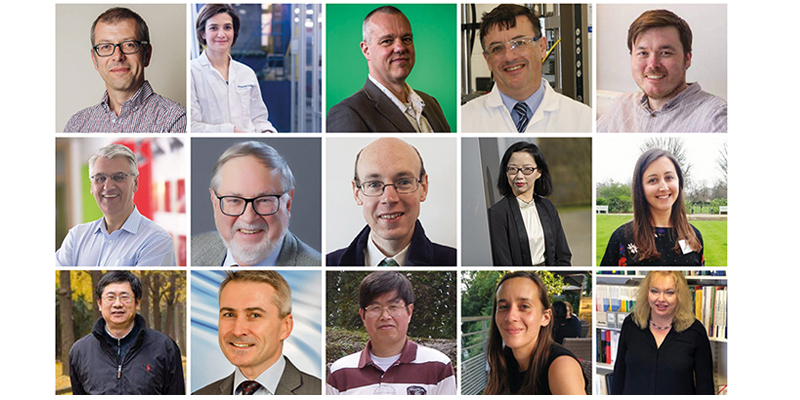
FESI’s 16th International Conference on Engineering Structural Integrity Assessment (ESIA16) took place via Microsoft TEAMS on the afternoons of October 6–8, 2021. Professor Peter Flewitt, a FESI director, welcomed the delegates to ESIA16. The event saw a rich and diverse programme of current thinking and recent developments in engineering structural integrity (ESI) presented over three afternoons by academic, industrial and business specialists. The TEAMS format allowed the audience generous opportunities to engage with the presenters, and the volume of questions and comments covered in lively and stimulating Q&A sessions indicated the relevance and value of ESIA16’s knowledge transfer.
The conference touched on some of the most critical contemporary issues such as digital Industry 4.0 technologies in, advanced medical technologies, and sustainable, clean energy. The presentations were arranged around three dedicated themes: New and Novel Methods, Challenges and Developments in Various Industries, and Developments Relating to Fatigue. Selected highlights from the conference follow.
Session 1: New and Novel Methods
Professor John Stairmand, Jacobs, UK, presented The Role of Digital Twins in Structural Integrity, giving a comprehensive overview of recent developments in digital twins in the field of ESI. Using the recent successful implementation of AGR Graphite Workbench as an example, Professor Stairmand introduced the benefits of DT technologies for managing complex assets such as a fleet of nuclear power plants, and explained some of the constraints and challenges in current DT developments with a particular focus on coping with increasing model complexity and the need to build integrated, hierarchical DT models. Professor Stairmand concluded by highlighting some strategic opportunities in the era of Industry 4.0 to advance ESI-related DT technologies.
Session 2: Challenges and Developments in Various Industries
Ensuring the Integrity of Endovascular Stent Graft Systems was presented by Professor David Nash, University of Strathclyde during the second day. With arterial disease being one of the major causes of morbidity and mortality, the minimally invasive anaconda stent graft system has many benefits for both patients and the surgical team. After 20 years of research the anaconda stent is now available for clinical use. As engineering structural integrity is a crucial aspect of such a system and directly affects its safety and long-term effectiveness, Professor Nash reviewed the approach to stent graft design and a series of computational and experimental studies that address issues including fracture, fatigue, and material degradation, together with some of the ongoing challenges around improved fidelity computational modelling, patient-specific design and in-vivo validation and monitoring.
Session 3: Developments relating to fatigue
Professor Feargal Brennan, University of Strathclyde, discussed The Management of Corrosion Fatigue in Offshore Wind Support Structures during the third, and final, session. The offshore wind industry has seen phenomenal success to date and is now central to UK Government’s Energy plans for the coming decades. However, the pioneering developments have not been without their challenges. Professor Brennan discussed research on managing the structural integrity of offshore wind farm structures, with a particular focus on corrosion and fatigue management strategies, including inspection, monitoring, fitness for service evaluation and repair. The lessons learned from the studies highlighted the need for updating relevant design and monitoring standards, and reflected a fundamental shift from a non-interventionist philosophy to one where inspections and maintenance are now widely believed to be indispensable.
Following a final Q&A session, the ESIA16 conference came to a successful conclusion on the afternoon of October 8, with a vote of thanks to all presenters and attendees from Professor Peter Flewitt.
A full conference report will appear in the forthcoming issue of The FESI Bulletin.
Elisabeth Le May
Editor, The FESI Bulletin
and
Yifeng Zhang
FESI Social Media Office
Photograph above. (Top row) Professor Bruce Drinkwater, University of Bristol; Dr Zahra Sharif Khodaei, Imperial College London; Professor Erik Schlangen, Delft University of Technology; Professor John Stairmand, Jacobs; Dr Tomas Martin, University of Bristol. (Middle row) Professor David Nash, University of Strathclyde; Professor Roderick Smith, Imperial College London; Dr Michael Roy, TWI; Dr Yin Jin Janin, TWI; Eleanor Crossley, ONR. (Bottom row) Professor Guozheng Kang, Southwest Jiaotong University; Professor Feargal Brennan, University of Strathclyde; Dr Yanhui Zhang, TWI; Dr Alice Cervellon, ENSMA; Professor Janice Dulieu-Barton, University of Bristol.