
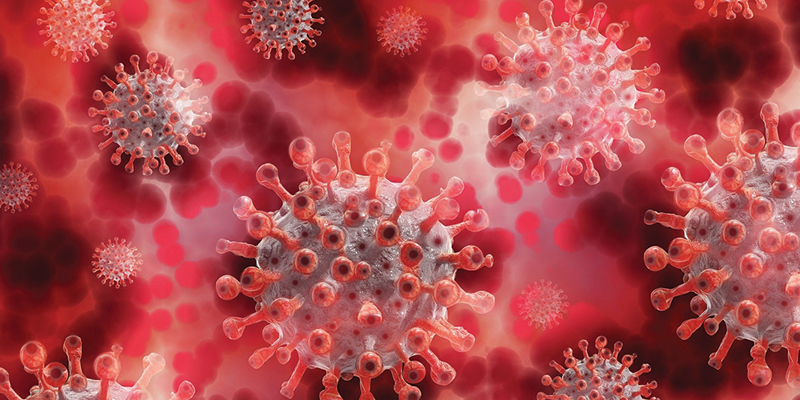
On New Year’s Eve 2019 very few of us could have foreseen the global impact in 2020 of the outbreak of a novel coronavirus in Wuhan City, China. The zoonotic disease caused by the SARS-CoV-2 virus, known as COVID-19, spread rapidly through populations and by 30 January 2020 the World Health Organisation declared an International Public Health Emergency – a global pandemic. On the evening of March 23 lockdown measures for the UK were announced; intended initially to apply for three weeks, the restrictions were soon extended. In June, the gradual lifting of lockdown restrictions began. From July further easing, combined with measures to restart the economy, will be subject to review and dependent upon factors such as monitoring the ‘R’ rate to contain the disease and mitigate further localised infections, further study of the disease itself as complications and unexpected after-effects become evident, and upon the cooperation of the public in observing government and community guidelines.
The novel threat
“Humanity remains much more vulnerable to pandemics than we would like to believe …”, says Toby Ord, senior research fellow at the Future of Humanity Institute (FHI), University of Oxford, and author of The Precipice: Existential Risk and the Future of Humanity. Natural pandemics are known to occur every 50 to 100 years and have, throughout history, resulted in very large numbers of fatalities. The last global event, the so-called ‘Spanish Flu’, with fatalities estimated in excess of 50m worldwide, occurred in 1918 so COVID-19 was, perhaps, slightly overdue. The common assumption made in recent but pre-2020 threat, risk and shock assessments was that a pandemic would be caused by influenza. Although seasonal flu and COVID-19 share some characteristics – both are respiratory diseases transmitted person-to-person – flu is a much older disease and affects around one billion people annually with a mortality rate of below 0.1%. The consequences of COVID-19, little known at the start of the pandemic, are much more severe with an estimated mortality rate of 3-4%, the highest incidence occurring in those over 80, and reaching 50% amongst those who are hospitalised and require invasive ventilation. The National Risk Register, published by the Cabinet Office in 2008, judged that ‘Pandemic Influenza’ would of all risks considered have the highest relative impact on the UK, and that its relative likelihood was high. The Cambridge Global Risk Index 2019 ranked ‘Human Pandemic’ as the fourth greatest shock leading to economic loss on the basis of data from 279 cities/41% of global GDP. Global Priorities Project 2017’s report, Existential Risk, Diplomacy and Governance, ranked ‘Engineered pandemics’ as the third greatest threat following ‘Nuclear war’, and ‘Extreme climate change and geoengineering’. Although the report’s concern is engineered pandemics, it presents opportunities for the reduction of risk which can apply equally to natural pandemics – especially those caused by novel viruses – and states, “… humanity will require increasing levels of trust and international collaboration in order to face the challenges that threaten us all … understanding them will need deep and sustained engagement with the global research community.” Speakers at Global Pandemics: Is the UK Prepared? All-Party Parliamentary Group for Future Generations endorsed this view in November 2018, and Catherine Rhodes, Executive Director of the Centre for the Study of Existential Risk (CSER), University of Cambridge, drew attention to a number of concerns which included the severe burdens a pandemic would place upon the healthcare infrastructure and the distress caused when temporary mortuaries were necessarily established in community settings. Exercise Cygnus in 2016 involved government departments, the NHS and local authorities in a dry run to test Britain’s Emergency Preparedness, Resilience and Response (EPPR) plan. The findings of epidemiologists from Imperial College London were that in a real-life scenario involving acute respiratory illness there would be insufficient PPE (personal protective equipment) for frontline medical staff, a severe shortage of ventilators and critical care beds, and morgues would be overwhelmed.
‘Whole system’ collaborative engineering: meeting the pandemic’s challenges”
It is against this background that across the UK in March 2020 huge numbers of engineers across all disciplines in industry and academia mobilised to respond to the COVID-19 pandemic. They worked, and at the time of writing are working and will continue to work with, inter alia, domestic and international colleagues, partners including the NHS, healthcare and social care providers, care homes, pharmacists, clinicians, medical and other professionals, researchers, technicians, admin staff, students, members of the UK’s workforce, the armed forces, volunteers, businesses, civil society and government. Many existing projects with the potential to have positive impacts on COVID-19 were accelerated so they could be made available at speed, other projects concentrated on the vital production of PPE for frontline staff, and necessary equipment was manufactured for use in hospital ICUs.
The environment was fast moving and subject to rapid change as knowledge about COVID-19 and its specific characteristics accumulated.
In March 2020 IMechE asked readers of their in-house magazine, Professional Engineering, to suggest ways in which, other than making ventilators, engineers could help the fight against coronavirus. IMechE identified six board categories of response: 1. Prevent the spread – enhancing testing, developing diagnostics, improving logistics; 2. Support the NHS – increasing hospital capacity with off-site engineered structures and conversions such as the NHS Nightingale Hospital at ExCel London, improving PPE, addressing the need for future vaccine delivery mechanisms; 3. Spread STEM knowledge – inspire and engage a future generation of engineers; 4. Strengthen home industry – capitalise on skills and resources within the UK to reduce reliance on foreign imports; 5. Prevent future outbreaks – reappraise foreign travel associated with academic pursuits, assess medical equipment so designs can be open-sourced, look ahead and plan; and finally, 6. Run the country – reader Grant Tuff said, “Whole-system thinking is something that is often lacking in central government. Engineers can help with this …”
The Institute of Physics (IoP) sent out an urgent call for engineering volunteers to work with NHS staff in field hospitals across the UK, saying, “Under normal operations, engineers and technicians work quietly in the background … this is no longer the case. The effective delivery of clinical care will only be achieved if engineers and technicians work alongside their clinical counterparts.” EBME’s website for medical, biomedical and clinical engineering professionals published guidelines to enable medical equipment to be rapidly commissioned in emergencies and in field hospitals across the UK. Looking at a potential 112,500 hours of commissioning work in 10 field hospitals, and acknowledging the primary need for patient safety, EMBE set out circumstances in which a volunteer or member of the armed forces could usefully act, and when it was essential to have an engineer, saying, “We must accelerate the implementation … challenge the traditional methods … learn … and adopt safe ‘shortcuts’.” An Oxford Biomedical Research Centre (BRC) project hugely accelerated work on a wearable device – a ‘virtual High Dependency Unit’ (vHDU) – which could be quickly adapted to assist NHS by monitoring ambulatory COVID-19 patients hospitalised in isolation wards who hadn’t required invasive ventilation. The device, which alerted nursing staff to any changes in patients’ physiological signs, saved time and energy by remotely monitoring at-risk patients. Birmingham City School of Health Sciences’ website highlighted the role of biomedical engineers in industry who were producing PPE and learning to reverse engineer ventilators to speed up manufacturing processes. Their Visiting Lecturer in Biomedical Engineering, Ian Chell, who after 22 years with Siemens worked for the Medical Devices Agency, now Medicines and Healthcare products Regulatory Agency (MHRA) as a Medical Device Specialist, said, “The recent COVID-19 events will change the face of Biomedical Engineering. Now, when you tell people you are learning about Biomedical Engineering, everybody will be able to relate to what you do …”.
The Institution of Engineering Designers and engineers collaborated on an initiative entitled Engineers for the NHS, led by biomedical engineer Professor Peter Ogrodnik, Keele University. The project’s purpose was to provide solutions to emerging issues identified by the NHS and other care providers in the UK and abroad, and to facilitate international collaboration on this work. Imperial College London’s COVID-19 Response Fund was launched in March 2020 and over 500 sponsors backed some 30 projects including the development of a number of tests for COVID-19, development of measures to enhance the protection of frontline staff, and new engineering solutions for hospitals which can support the health services community worldwide. COG-UK(COVID-19 Genomics UK Consortium), comprised of engineers, academic partners, Britain’s Public Health Agencies, NHS organisations and the Wellcome Sanger Institute, received over £20m funding from the Department of Health and Social Care to deliver large-scale and rapid whole-genome virus sequencing. COG-UK’s outputs will be widely shared and, combined with clinical and epidemiological data, will inform health interventions and policies, the development of treatments and vaccines, guide impact evaluation, and track outbreaks to discover if they are new transmissions from outside the country or if they are of domestic origin.
“What engineers do best: see a problem, get creative, and do whatever it takes to solve it”
By late May the Engineering Professors’ Council (EPC) had published the results of an earlier survey conducted in the UK’s universities which evidenced the truly remarkable response from engineers and the multiplicity of COVID-19 initiatives. These ranged from production of PPE, often together with partners in industry, through the donation of items of equipment including ventilators by, for example, the Departments of Electrical and Electronic Engineering, Materials Science and Engineering, and Chemical and Biological Engineering at the University of Sheffield, to the University of Swansea’s work with partners to provide a solution for rapid ambulance sanitising. The vast majority of responding universities produced PPE with industry partners, using 3D printing – also known as additive manufacturing – to manufacture on scale and at pace. Cardiff University developed and tested new materials and decontamination methods for masks so they could be reused. The University of Exeter worked with their local 3D printing community and lent out 10 of their 3D printers to help produce PPE for the city. The University of Hull and an injection-moulding company collaborated to produce over 33,000 face mask components in under a month, with the aim of producing 35,000 to 70,000 face shields per week; the cost was met by crowd funding. The University of Plymouth participated in a city-wide 3D printing project coordinated by Babcock Engineering, and Dr Anthony Robotham, Associate Professor of Mechanical Engineering, designed a completely recyclable and compostable face shield BSI type-approved for use with COVID-19. The University of Edinburgh designed a process to provide clinical engineers with bespoke manufactured medical items in emergency conditions, while research undertaken by their engineers showed that face coverings can be effective in hindering the virus’s spread – a finding now widely adopted and in some circumstances mandatory. The Chemical and Biological Engineering Departments, University of Sheffield, worked on projects to produce the COVID-19 spike protein to assist with an antibody test and to extract viral RNA from patient samples to assist with detection.
Of these and the many other engineering projects, Colin Turner, the EPC’s President, said, “ … [this is] what engineers do best: see a problem, get creative, and do whatever it takes to solve it.”
The Royal Academy of Engineering (RAE) gathered evidence to inform government about the impact of the pandemic and intelligence, and about the different ways in which engineering communities in the UK and across the globe can work to meet challenges as societies move out of lockdown. The dissemination of intelligence about innovating and scaling at pace is facilitated through Innovation in a Crisis, a series of online Q&A interviews with engineers involved in projects such as the UCL-Ventura Continuous Positive Air Pressure (CPAP) breathing aid and work on building the NHS Nightingale Hospitals. Their Engineering X Pandemic Preparednessgrant programme will share lessons with UK and international audiences to inform global preparedness and recovery. The RAE is amongst those celebrating engineering achievements from the pandemic: a number of President’s Special Awards for Pandemic Service will recognise exceptional engineering contributions at any level or career stage. There is expected to be a second round of President’s Special Awards in 2121 to recognise ongoing work.
Ventilators for the NHS: a remarkable engineering response
The UK Ventilator Challenge, a race against time and the odds, was launched to an audience of 100 manufacturers by the Cabinet Office on March 16, 2020 with an initial specification for a Rapidly Manufactured Ventilator System (RMVS). At the time, the NHS had some 8,000 invasive mechanical ventilators and it was forecast that many more – possibly as many as 30,000 – would be needed within perhaps two weeks to cope with peak infection needs. Small numbers of ventilators had been made available through purchase from specialist suppliers, importing from abroad and, reportedly, borrowing from the BBC’s hospital drama series Holby City. By April 5 the target for the Ventilator Challenge was reduced to 18,000, and on April 8 the technical specifications were amended to reflect clinical advice concerning the special needs of COVID-19 patients as they unfolded. The MHRA assisted by compressing lengthy Health & Safety and approvals processes which normally take many months, if not years.
One of the many companies which stepped up to the Ventilator Challenge with expertise, time, and resources was Babcock International. Babcock charted the story of the Babcock Ventilator Team, drawn from the Defence Systems Technology (DST) business, who started from a position of zero about medical ventilators. The team worked nights and weekends on the Zephyr Plus and devised a supply chain solution to meet their needs. The DST’s Managing Director, Richard Drake, spoke of their remarkable achievement in just 100 days and of their collaborative approach, saying, “Every person and every company we reached out to pulled out all the stops to support us and we’re deeply grateful.”
A number of industry partnerships worked on ventilator designs. Under the title Project Pitlane, Aston Martin, Red Bull Racing and Renault DP World F1 Team worked with a small specialist provider on a model called BlueSky, previously known as Remora. The engineering group Dyson collaborated with The Technology Partnership on breathing apparatus CoVent.
The VentilatorChallegeUK Consortium, led by the High Value Manufacturing (HMV) Catapult – a group of UK manufacturing research centres set up by Innovate UK, itself part of UK Research and Innovation (UKRI), the UK’s main funding agency for science and research – brought together a focussed blend of expertise from 33 leading firms. The industrial, engineering and technology businesses from the aerospace, automotive and medical sectors included Rolls Royce, Siemens, Ford, Renishaw, Unilever, Airbus, Meggitt and Surface Technology International (STI). Concluding that the most effective approach would be to focus on capacity from within the group, production of Penlon’s Prima ESO2, adapted from anaesthesia equipment, and Smiths Medical’s paraPAC mobile ventilator was accordingly ramped up from a combined total of 50-60 units to 100-200 per day. Sam Turner, chief technology officer of the HVM Catapult, described the work stages: “ … the ability to very quickly design, iterate, quality-check, verify, build prototypes, scale those to volume production, source supply chain components internationally.” The scale of the operation was colossal and it all took place under lockdown conditions: 5500 people worked on the project across nine sites. Seven new manufacturing and test sites were established. Assembly lines at Ford Dagenham, Rolls Royce, Airbus and others aimed to produce 1500 units per week. 3000 people were trained to assemble and test the equipment. Millions of components were sourced from around the world, and supply chains were established. Project partner Renishaw manufactured 115,000 precision machined ventilator component in the first month, which used 5 km of metal bar stock, equivalent to the length of 50 football pitches and the weight of five African elephants. Dick Elsy, Chief Executive of the HMV Catapult, commented that the speed of their response was in no small measure due to the influence of the Consortium’s F1 engineering teams including Haas F1, McLaren, Mercedes-AMG F1, Williams F1: “We grabbed the opportunity of moving at the pace the F1 guys would move at. They lifted our spirits of doing things quickly and applying large amounts of top-quality intellectual horsepower to problems. We were able to achieve an enormous amount in a very short space of time which became infectious and self-fuelled the process.”
On 28 April the Cabinet Office published an update to the Ventilator Challenge, reporting that 15,000 units of Penlon’s Prima ESO2 had been ordered and Smiths ParaPAC was being manufactured at speed. By that time, every patient who required access to an invasive medical ventilator had one. In addition, production of two existing life support devices from Breas Medical, a firm specialising in ventilation and airway clearance, was being scaled up and a Mercedes F1-University College London collaboration would supply 10,000 non-invasive CPAP breathing aids. Michael Gove, on behalf of the UK’s government, called the teamwork, innovation and commitment shown by manufacturers who responded to the Ventilator Challenge “inspirational”.
In the meantime, a low-tech low-cost ventilator was developed for use in the field and in poor and geographically remote areas including those in low and middle income countries. Professor of Clinical Biomechanics Nachi Chockalingham, Staffordshire University, a member of the team of engineers, clinicians and industry partners who worked on the project said, “[The ventilator] is designed to function and withstand the much harsher environment found outside the average hospital, such as that in a field hospital or rural community health service.” The ventilator, which went from the initial idea to testing in just three weeks, uses a windscreen wiper motor and can work on battery, mains, solar or wind turbine power.
Chemical and environmental engineers have a huge task ahead of them in determining how the coronavirus persists, and whether or not existing waste and wastewater treatments are effective. Solutions could lie in composting, mesophilic anaerobic digestion at temperatures of between 20°C and 37°C, and biofilters. The synthesis of antiviral APIs – Active Pharmaceutical Ingredients – is also key for any vaccine.
“Engineers will be the key workers of the recovery”
So argues Professor Colin Turner at EPC. He envisages that engineering skills will make significant logistical, practical and economical contributions to the UK’s ‘reset’. The COVID-19 pandemic drew attention to a number of engineering issues including domestic manufacturing productivity, low uptake of automation – the UK lags behind Europe in 22nd place worldwide – and the need for reliable broadband to be embedded into the UK’s communications infrastructure on par with any utility. Other issues concerned power generation and ownership, supply chain disruptions, and the manufacture and supply of steel – in 2018 the UK did not appear on the World Steel Association’s list of the world’s top 41 steel manufacturers.
Smart engineering: an unforeseen benefit of the pandemic?
The pandemic has, however, had a perhaps unforeseen benefit to society: “COVID-19 will prove a catalyst. It will accelerate changes already happening on a number of fronts; bringing manufacturing back to the UK …”: said a respondent to a poll on how COVID-19 might reshape UK engineering conducted in April by The Engineer. The Fourth Industrial Revolution – Industry 4.0 – is the term which describes the changes referred to above, the changes brought about by digitalisation: working practices, factories, manufacturing processes, and production lines have been impacted by automation, autonomous systems, data exchange, and machine learning. TWI lists Industry 4.0 technologies as the Internet of things (IoT), the Industrial Internet of things (IIoT), Cyber-physical systems (CPS), Smart manufacture, Smart factories, Cloud computing, Cognitive computing, and Artificial intelligence (AI). Engineers and their partners used Industry 4.0 systems and technologies to respond to COVID-19 challenges, achieving increased productivity within hugely compressed timescales while collaborating remotely with UK-based and international partners. Automated supply chains, as just one example, enabled millions of components to be sourced worldwide within days for the Ventilator Challenge. Automated warehousing including picking and dispatch can reduce the risk that manufacturers’ reliance on their supply chains will be interrupted by future events such as a pandemic while decentralised models bring supply and manufacture together in regions with consequent upticks for that region’s economy. 3D printing, also known as additive manufacturing, was used extensively to, for example, produce components for face masks and shields; now metal can be used its application will be even wider. Ben Wilson, Additive Manufacturing and Prototype Design Manager, Jaguar Land Rover, stated that, “3D printing is the ideal technology to react quickly in times like these as it does not require lengthy processes to develop tooling. Parts can be made in hours rather than days or weeks. This agility allows us to speed up the development of a product like no other.” Jaguar Land Rover used 3D technology to scale up its production of protective visors from around 2,000 units per week to 14,000.
Analysis of huge volumes of inter-connected data in timeframes unachievable by humans will vastly improve the speed at which solutions can be found. AI is being used at Imperial College London in the development of an app that will assist with decision-making for antibiotic prescriptions in cases of COVID-19. Imperial’s Departments of Bioengineering and Computing are working on a project led by Dr Aldo Faisal, Director of the UKRI Centre for AI in Healthcare, which uses AI and machine learning using datasets from 10 hospitals to improve the management of and outcomes for COVID-19 patients on ventilators and suffering from Acute Respiratory Distress Syndrome (ARDS). King’s College London’s School of Biomedical Engineering & Imaging Sciences is working with healthcare science company Zoe to analyse data from volunteers who use their COVID-19 Tracker App. Professor Sebastien Ourselin, Head of School, said, “Our team has used advanced statistical tools and machine learning capability to provide predictions of severity, required treatment, healthcare burden and future requirements and collateral effects.” The outputs are shared with the NHS and government to inform disease management and to assist with the allocation of resources. Of immediate interest is of course a COVID-19 vaccine; Murat Sonmez, managing director of the World Economic Forum said of this, “ … machine learning algorithms will come up with new insights faster than any human experts can.” Identification of the vaccine is only the start, however, as engineering solutions for production and distribution on huge scales will need to be found.
Industries hit hard hit by the pandemic – physical industries and/or those in which technology has largely been office-based, such as the construction industry – may be assisted in future by Industry 4.0 approaches. Civil engineering industries, for example, can employ Industry 4.0 technologies such as digital twinning – a cyber-physical system (CPS) – and use remote working for activities previously undertaken on-site while reducing costs and increasing the speed of delivery. Winnie Lai, Institution of Civil Engineers, Hong Kong, pointed out that hard copies of documents and plans could be replaced by digital copies, Building Information Modelling (BIM) and Virtual Reality (VR). Mapp, developed by Sensat is an example of a “3D digital environment”, as is AECOM’s natural capital accounting platform, developed as part of their Natural Capital Laboratory project. Mapp aggregates millions of data points from drones, laser scanning and satellites to produce high resolution virtual copies of the real world; using these ‘digital twins’ facilitates decision-making, more accurate cost analyses and budgeting, and reduces on-site time. Mapp has been used by, for instance, Transport for London on a rail project in Barking for the accurate measurement of soil stockpiles. Aecom’s platform similarly allows the digital recreation of a natural asset which can be remotely visited and uses Artificial Intelligence (AI) for data collection and analysis. Their Natural Capital Laboratory is trialling ecological AI, including using drones to plant trees and robotics for soil sampling as part of a joint venture with conservation charity The Lifescape Project on land near Loch Ness in Scotland. Robots can also be used for cleaning and repairing roads.
Digital connectivity: the new way to add value to collaboration
A key feature of engineering responses to COVID-19 under pandemic conditions was the use of digitalisation to achieve extensive connectivity, collaboration and synergy across the UK and worldwide and this will only be accelerated post-pandemic. Digital platforms including Zoom, FaceTime, Skype and Microsoft Teams have allowed people to become more generally comfortable with remote working, and both sides of the equation can appreciate the flexibility this affords. The possibilities of digital collaboration on local, nationwide and global scales was illustrated by the numerous successful outcomes of engineering projects taking place in lockdown conditions. Making designs open-source is another way of adding value to engineering responses to COVID-19; not only are successful designs available to wider populations but the design itself can be improved upon by users. Dr David Petraco, who worked on the Imperial College London/National Heart & Lung Institute project to develop 3D printed components for face mask conversion will make successful designs available open-source so they can be replicated worldwide. Digital working has been grasped with both hands and the advantages are obvious; the methods for bringing people together are more environmentally friendly and much cheaper. Remote collaboration will increase as academics and professionals re-evaluate the need for international travel. Meetings and conferences are no longer limited by a delegate’s ability to be physically present. For example, a working group of the Virtual International Water Research Summit on COVID-19, convened by the Water Research Foundation to address the environmental surveillance of COVID-19 indicators in sewersheds and waste-water, benefitted remotely from academic expertise from Professor Vanessa Speight, Department of Civil and Structural Engineering, University of Sheffield. Thirty-three partners were linked in the VentilatorChallengeUK Consortium in what Dick Elsy called “… a truly collaborative international effort, with the best and brightest engineering and manufacturing brains coming together …”. Not only was the transfer of engineering knowledge and expertise agile, but other information including the intellectual property rights which underpinned the engineering effort was also exchanged at speed. Sam Turner, HMV Catapult, commented that, “… [it’s been] a great example of how engineers can respond – actually when some of the barriers are removed – really quickly, to deliver something phenomenal at scale.”
Hacking, used as a mass tool for ‘invention marathons’ brought 2,500 people together to work on technological approaches to addressing COVID-19 issues in Hack Quarantine, organised by the University of Birmingham. Will Russell, project coordinator and a student at the College of Engineering and Physical Sciences, said, “By working with medical professionals and industry, we’re providing knowledge and tools to empower hackers to work towards improving health, remote working and helping vulnerable populations.” Major League Hacking, the official student hacking league, holds 200 competitions annually to foster innovation, teach skills, and create communities. Some 65,000 students participate globally – thus providing a springboard for post-pandemic partnerships and the dissemination of expertise and know-how.
Agile manufacturing for increased productivity
Augmented reality (AR) was another tool used extensively by engineers including, for example, the University of Sheffield’s Advanced Manufacturing Research Centre (AMRC), a member of the HVM Catapult. Their R&D facility, AMRC Cymru, remotely trained staff for work on the ventilator production line created in collaboration with Ford. Project partner PTC’s Vuforia Expert Capture AR technology was used together with hundreds of Microsoft’s HoloLens 2 smartglasses which manipulate holograms to create a ‘virtual assembly line’ simulation which was relayed digitally to trainees at partners’ factories. The use of AR helped to reduce set-up lead-times and develop a manufacturing approach which led to hugely increased production and will in turn inform manufacturing agility for the future.
In parallel to people becoming more accepting of – and indeed welcoming – remote working, so is a perception that robots are ‘safe’; they can therefore be used more readily in situations where human interaction would bring risk – delivering food to hospital patients in isolation, for instance, and in virus testing and for maintaining social distancing. High specification robots can achieve extraordinarily delicate tasks, but they also have huge potential to work on other tasks such as cleaning and sanitising in healthcare and other environments, removing viral and other contaminants from spaces, and in search-and-rescue operations. AMRs (Autonomous Mobile Robots) and AGVs (Autonomous Guided Vehicles) are already widely used in, for example, warehouses and factories and on assembly lines. Cobots – collaborative robots – can be used in factories to maintain social distancing requirements in what would otherwise be multi-person functions.
Industry 4.0: protecting frontline and key workers
Industry 4.0 technologies have a huge and very welcome advantage during pandemic conditions and in other high-risk environments: they can keep workers safe. Anxiety about contracting COVID-19 is understandably very high amongst frontline staff. “Healthcare workers are exposing themselves to a very high risk of viral infection.”, said Dr Ricardo Petacro, Imperial College London, and inefficient or inadequate PPE exacerbates this and moreover leads to increased infections and thus a reduced workforce. Developments such as BRC’s vHDU – the virtual High Dependency Unit first used in an isolation ward at the John Radcliffe Hospital, Oxford – reduces staff’s exposure time to a COVID-19 environment. Engineers at Swansea University helped to keep ambulance staff safe through their rapid decontamination initiative by more than halving the time normally taken for hand cleaning, during which time staff are potentially exposed to the virus. Robots and cobots have a part to play, as Dr Helen Meese CEng MIMechE and founder of healthcare provider The Care Machine says, “We need long-term solutions and that may involve automation, it may involve robotics, there may be all kinds of things people can turn their minds to, post-COVID.” Dr Meese, is however, adamant that technology and ‘the human touch’ must enhance, not detract from, each other.
Inspiring the next generation of engineers
Learning from COVID-19 initiatives will not be overlooked, and future generations of engineers will be inspired. IMechE’s magazine Professional Engineering highlighted the intention of engineers to build on the lessons learned during the pandemic, even if the pace of innovation and production is unsustainable in the long-term. Part of that will be engaging future generations: a website created by engineers at the University of Sheffield will allow GCSE and A-Level physics students to conduct experiments and continue to learn while schools are closed thus engaging future generations. Imperial College London’s Advanced Hackspace is a facility which allows its student members to meet all their prototyping needs and includes electrical and mechanical engineering workshops, digital modelling and fabrication spaces for going beyond simple 3D printing, and physical computing workspaces. Their ‘Hack at Home’ allows each student a 15-minute timeslot of dedicated advice from with a Hackspace team member. Helen Meese says, “Think about becoming a clinical engineer.” The results of the first round of RAE’s Engineering X Pandemic Preparedness programme to find interdisciplinary, collaborative projects which will enable engineering’s ability to respond to the pandemic will be announced, with a second call for proposals to follow.
Moving forward, engineers will become familiar with new soft and people-related skills for Industry 4.0 applications. “ … it’s a phenomenal learning curve … there are a lot of things we can learn about self-organising teams, appropriate delegation of authority, really clear mission focus and communications.”, said Sam Turner, HVM Catapult. Dick Elsy, VentilatorChallengeUK Consortium, said, “A lot of what was achieved was by … empowering the right people to get together in teams to self-organise and solve problems.”
Dick Elsy cancelled his plans to retire so he can see engineers capitalise on achievements from the pandemic and inspire a new generation of engineers while they play a part in society’s post-COVID-19 recovery, saying, “What’s happened over the last few weeks is a fantastic thing for the industry to have done. It’s got an “engineering’s finest hour” feeling about it …”.
Safeguarding the future
“WWII was won by the factories of the UK, and so will COVID-19 be defeated in a similar way …”, said Darren Marsden, managing director of Intec Laser Services, in The Engineer. But Toby Ord, FHI, Oxford, says we cannot wait until a threat strikes before acting: “… we must be proactive … with clear and rigorous thinking, guided by a positive vision of the longterm future we are trying to protect.” In June 2020 scientists advised that a new, recently identified strain of swine flu has appeared in China and has the ability to mutate and infect humans. Although this does not appear to be an immediate threat, and existing flu vaccines could be adapted to protect against it, Professor Kin-Chow Chang, School of Veterinary Medicine and Science, University of Nottingham, warns, “ … we must not lose sight of potentially dangerous new viruses.”
Elisabeth Le May
Editor, The FESI Bulletin
This article first appeared in the Summer 2020 issue of The FESI Bulletin.