
Royal Society Publishing has recently published Part I of a special themed double issue of Philosophical Transactions A: Physics-informed Machine Learning and Its Structural Integrity Applications (Part 1) compiled and edited by Shun-Peng Zhu (ESIA17–ISSI2023 Session Chair for Probabilistic Failure Assessment), Abílio M P De Jesus, Filippo Berto, John G Michopoulos, Francesco Iacoviello, and Qingyuan Wang.
This theme issue explores the advances in physics-informed machine learning (PIML) and its structural integrity applications through accurate failure mechanism modelling, combining either deterministic or probabilistic analyses by using artificial intelligence (AI) methods. Specifically, this collection discusses several critical issues related to learning from massive amounts of data, and highlights current research endeavours and the challenges to data science in structural integrity and safety, especially incorporating physics into machine learning models. Note that PIML improves consistency with prior knowledge, extrapolation performance, prediction accuracy, interpretability and computational efficiency and reduces dependence on training data, which provides an excellent opportunity to discover new physics under small samples and ambiguous physical mechanisms.
The articles can be accessed directly at www.bit.ly/TransA2260.
A print version is also available at the special price of £40.00 per issue (usual price £60.00) by contacting the Royal Society sales team at sales@royalsociety.org and quoting the promotional code TA 2260. Part 2 will be available on November 20.
Contents
Preface
Physics-informed machine learning and its structural integrity applications
Shun-Peng Zhu, Abílio M.P. De Jesus, Filippo Berto, John G. Michopoulos, Francesco Iacoviello, and Qingyuan Wang
Articles
Physics-informed machine learning and its structural integrity applications: state of the art
Shun-Peng Zhu, Lanyi Wang, Changqi Luo, José AFO Correia, Abílio MP De Jesus, Filippo Berto, Qingyuan Wang
Neural optimization machine: a neural network approach for optimization and its application
Jie Chen and Yongming Liu
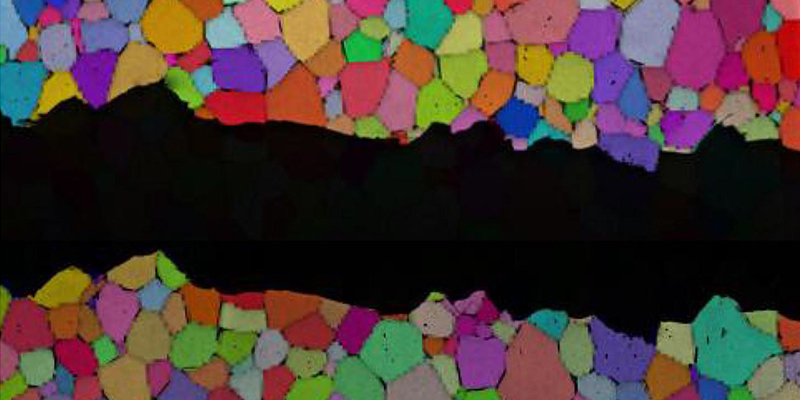
A machine learning study on the fatigue crack path of short crack on an α titanium alloy
Zhengyu Shen, Guanlin Lv, Daixin Fu, Yihao Long, Zhouyu Zhang, Kai Tana, Lang Li, Qingyuan Wang, and Chong Wang
A time variant uncertainty propagation method for high dimensional dynamic structural system via K-L expansion and Bayesian deep neural network
Jingfei Liu, Chao Jiang, Haibo Liu, and Guijie Li
A defect driven physics-informed neural network framework for fatigue life prediction of additively manufactured materials
Lanyi Wang, Shun-Peng Zhu, Changqi Luo, Xiaopeng Niu, and Jin-Chao He
A physics-guided modeling method of artificial neural network for multiaxial fatigue life prediction under irregular loading
Tianguo Zhou, Xingyue Suna, and Xu Chen
Fault logic and data-driven model for operation reliability analysis of flap deflection angle
Wan-Yi Liu, Yun-Wen Feng, Da Teng, Cheng Lu, and Jun-Yu Chen
Fatigue reliability analysis of aeroengine blade-disc systems using physics-informed ensemble learning
Xue-Qin Li, Lu-Kai Song, Yat-Sze Choy, and Guang-Chen Bai
Investigation of flexural behaviour of composite rebars for concrete reinforcement with experimental, numerical and machine learning approaches
Michał Smolnicki, Grzegorz Lesiuk, Paweł Stabla, Bruno Pedrosa, Szymon Duda, Paweł Zielonka, and Cristiane Caroline Campos Lopes
Contact
The Royal Society
6–9 Carlton House Terrace
London SW1Y 5AG
Telephone: +44 20 7451 2500
Web: royalsociety.org
Email: philtransa@royalsociety.org
The image illustrates crack path evolution on fatigued pure titanium. Credit—Qingyuan Wang, et al. A machine learning study on the fatigue crack path of short crack on an α titanium alloy. Phil. Trans. R. Soc. A. 2023; 381: 20220391.